Content Quality Tips Boosting educational value on YouTube
"The digital classroom is no longer a physical space but a stream of data flowing through billions of devices globally."
Boosting educational value on YouTube requires a strategic shift from mere entertainment to structured knowledge delivery. This guide explores how creators can leverage massive platform reach to foster learning, focusing on content quality, audience engagement, and technical optimization.
Key takeaways include understanding platform scale, managing content volume, and navigating the complexities of digital distribution.
How can creators manage the massive scale of YouTube?
At midnight in the dim studio, the creator rubs their tired eyes while staring at the endless sea of content on the screen.
A creator sits before a glowing monitor, watching a progress bar crawl toward completion as they upload a lecture. The sheer volume of content on the platform makes standing out a daunting task for any educator.
The sheer scale of the platform presents a significant challenge for those attempting to provide meaningful instruction. As of May 2019, more than 500 hours of video content are uploaded to YouTube every minute.
This constant influx of data means that educational creators must work harder to ensure their specific lessons reach the intended audience amidst the noise.
Effective strategies for making YouTube content educational involve moving beyond casual uploads to more intentional, structured curricula. Because of the massive upload rates, creators must focus on niche authority to avoid being lost in the sea of generic videos.
- Develop a repeatable production workflow.
- Delegate technical tasks to specialized editors.
- Implement a content calendar to maintain consistency.
What are the best practices for educational YouTubers?
An instructor adjusts a microphone, ensuring every word of a complex explanation is captured clearly for the viewer. They realize that clarity is the foundation of any successful teaching moment on a video-sharing site.
To maintain engagement, creators must balance high-quality production with clear, concise messaging. Best practices for educational YouTubers often involve breaking down complex subjects into digestible segments that mirror a classroom structure.
This approach helps viewers process information without feeling overwhelmed by the sheer density of the subject matter.

One must consider the historical context of how content is consumed to better serve modern learners. For example, in March 2010, YouTube began free streaming of certain content, including 60 cricket matches of the Indian Premier League.
This shift toward live, structured content demonstrates the platform's capacity to host large-scale educational or informative events.
In this sequence, the second step is the most time-consuming.
According to World Bank, the 2024 record includes 97.9%.
How do you improve creator education content through data?
A researcher looks at a dashboard filled with viewer retention graphs and engagement metrics. They use these numbers to understand exactly when a student loses interest in a lesson.
Understanding viewer behavior is essential for improving creator education content. By analyzing when viewers drop off, educators can refine their pacing and delivery to maintain interest.
This data-driven approach allows for the constant refinement of instructional methods to better suit the digital audience.
In the past, the platform's role in content delivery was more limited to basic uploads. In July 2007, YouTube partnered with Verizon Wireless to enable mobile phone users to submit videos through Multimedia Messaging Service (MMS).
This early connectivity paved the way for the mobile-first learning environments seen today.
What are the strategies for valuable YouTube content?
A producer organizes a library of video files, categorizing them into playlists that act as a cohesive course. They know that organization is just as important as the information itself.
In March 2010 YouTube began free streaming of certain content, including 60 cricket matches of the Indian Premier League, according to the Indian Premier League.
Structuring a channel into logical sequences is one of the most effective strategies for valuable YouTube content. Instead of random uploads, creators should build topical hubs that guide a learner from beginner to advanced levels.
This creates a repeatable learning path that encourages viewers to return to the channel.
The distribution of views can be highly concentrated, which requires a focus on high-impact content. In April 2011, a YouTube software engineer revealed that 30 percent of videos accounted for 99 percent of views on the site.
This reality underscores the importance of creating "anchor" videos that can drive traffic to an entire educational library.
How do you maximize learning impact on YouTube?
A student watches a video on a tablet while taking notes in a physical journal. The intersection of digital delivery and traditional study habits defines the modern learning experience.
Maximizing learning impact on YouTube requires moving from passive watching to active engagement. Creators can encourage this by including prompts for reflection, quizzes in the comments, or supplemental materials. The goal is to transform a single viewing session into a deep learning experience.
The scale of consumption is a testament to the platform's potential as a global classroom. As of February 2017, there were more than 400 hours of content uploaded to YouTube each minute, and one billion hours of content being watched on YouTube every day.
The sheer volume of daily viewing provides a massive, albeit crowded, stage for educational impact.
Is there a limit to educational content growth?
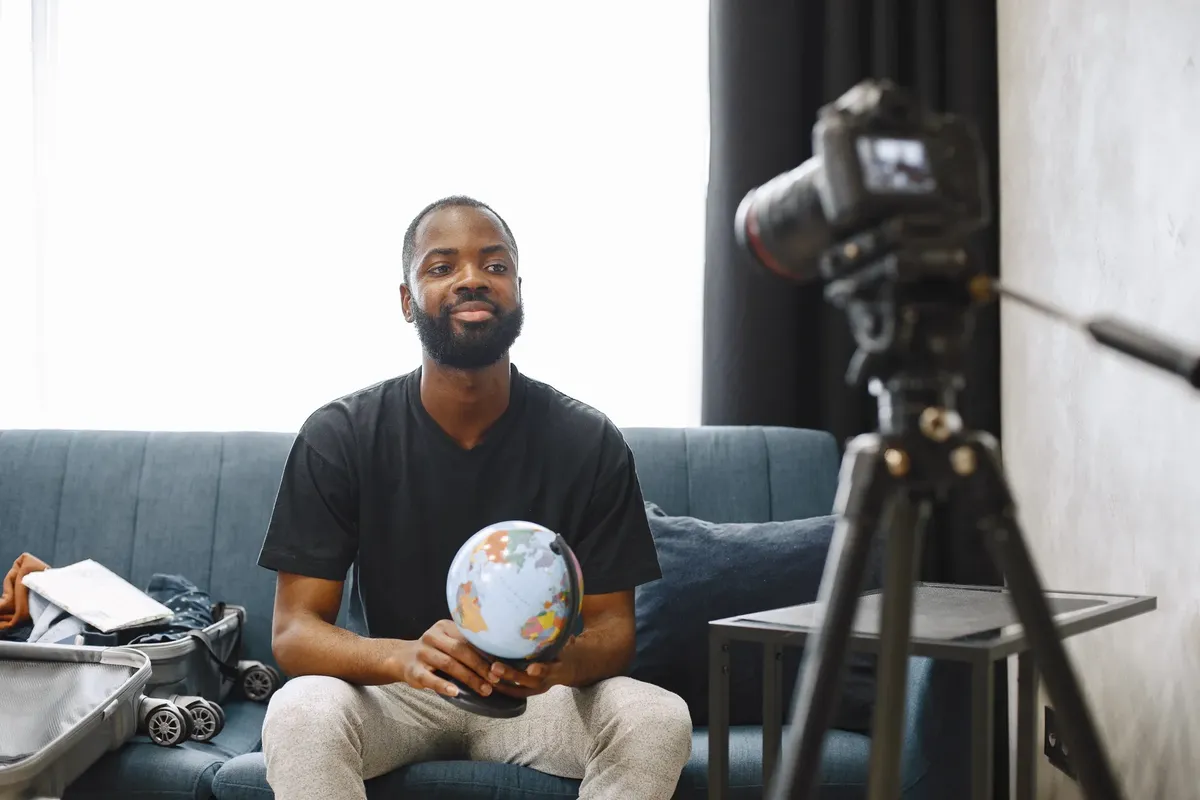
A creator pauses to consider the ethical and technical boundaries of their digital presence. They recognize that even the largest platforms have rules and limitations that affect content longevity.
While the potential for growth is vast, creators must navigate the shifting landscape of platform policies and technical changes. These factors can impact how much educational value can be successfully delivered to a global audience.
A significant limitation is the potential for sudden content removal or account changes.
This event highlights how platform-wide decisions can impact the availability of specialized or sensitive information.
Boosting educational value on YouTube
The subject here is Boosting educational value on YouTube.
The same subject is also called How to make educational YouTube.
This part also covers Deep dive into educational content strategy.
Related







Comments 0